
Blogging Towards Sunday, September 7, 2025
Logos by Mary Oliver; John 1:1-3, & 14; Genesis 1: 1-5; & Hebrews 11:1
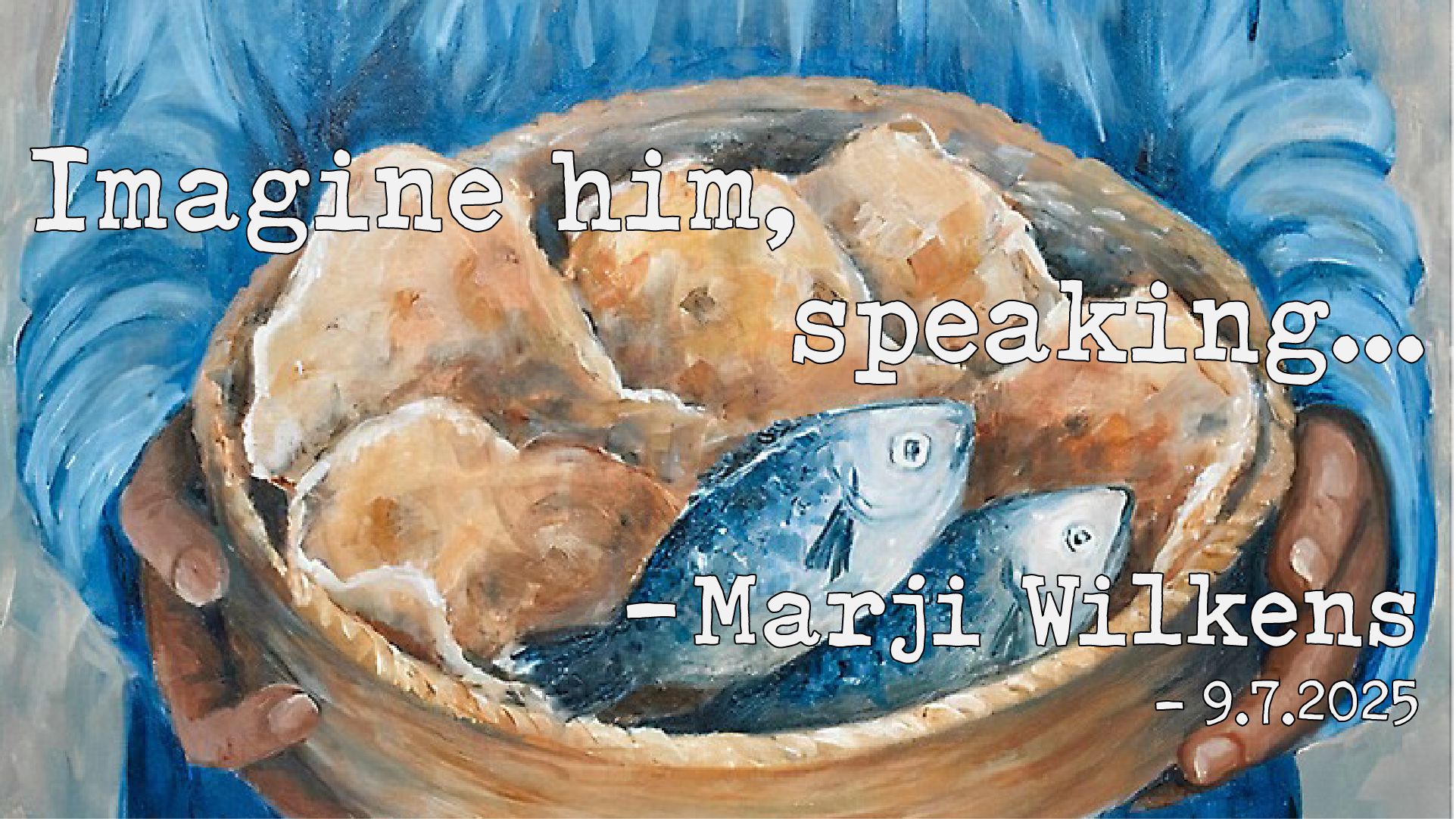
“And the Word became flesh and lived among us.”
– John 1:14
Logos is Greek for “word.” In the Christian context, Logos refers to Jesus Christ, the Son of God who became incarnate—meaning he took on human form—and is the embodiment of the Word of God. Christians believe that God has three equal parts: God the Father, God the Son (Jesus), and God the Holy Spirit. This concept is known as the Trinity.
The idea of Logos as the Word of God did not begin with John’s Gospel. The Greek philosopher Heraclitus (535 – 475 BCE) is believed to have been the first to use Logos to refer to a concept. Heraclitus believed that his philosophical thoughts and theories existed separately from him and were part of an overall intelligence that did not belong to any one person.
Stoic philosophers in the Hellenistic age (323 – 30 BCE) then associated Heraclitus’s definition of Logos with a divine intelligence. They referred to the organized reason God used in designing and shaping the world—God’s thoughts and mind—as Logos. The Stoics believed that society would be just, moral, and peaceful and an individual’s life would be more fulfilling when it was aligned with the purpose and plan of God’s Logos.
The Jewish Greek philosopher Philo (30 BCE – 50 CE) used the word Logos to refer to an entity that served as a liaison between God and humankind. He considered Logos to be like the firstborn child of God.
Early Christians adopted the idea of Logos as God’s mind and an intermediary or communicator between God and humankind. This concept is especially prevalent in the New Testament Gospel of John, which was written for a predominantly Greek audience around the year 90 CE. Those in this original audience would have been familiar with the Stoic’s idea of Logos as God’s mind and reason. The Gospel took this a step farther and directly associated the idea of Logos with the second person of the Trinity, Jesus.
This was important to those holding the Johannine viewpoint and other Christians because it conveys the idea that God desires a personal relationship with humankind. Logos—God’s mind and plan for the world—became incarnate. Jesus, while still maintaining his divine nature according to Christian belief, takes on a human form and lives among humans.
QUESTIONS FOR REFLECTION & EXAMEN:
• What engaged, enraged, or surprised you in these texts?
• How does this poem of Mary Oliver (Logos) connect with you?
• How do you feel it connecting to our other readings today?
• How do you experience Jesus as the Logos: living word of God?
• What do you hear God saying to you through today’s readings?
This post is a citation of the article found online HERE.
 CAPC Oakland