
Blogging Towards Sunday, July 9th – REAL 2
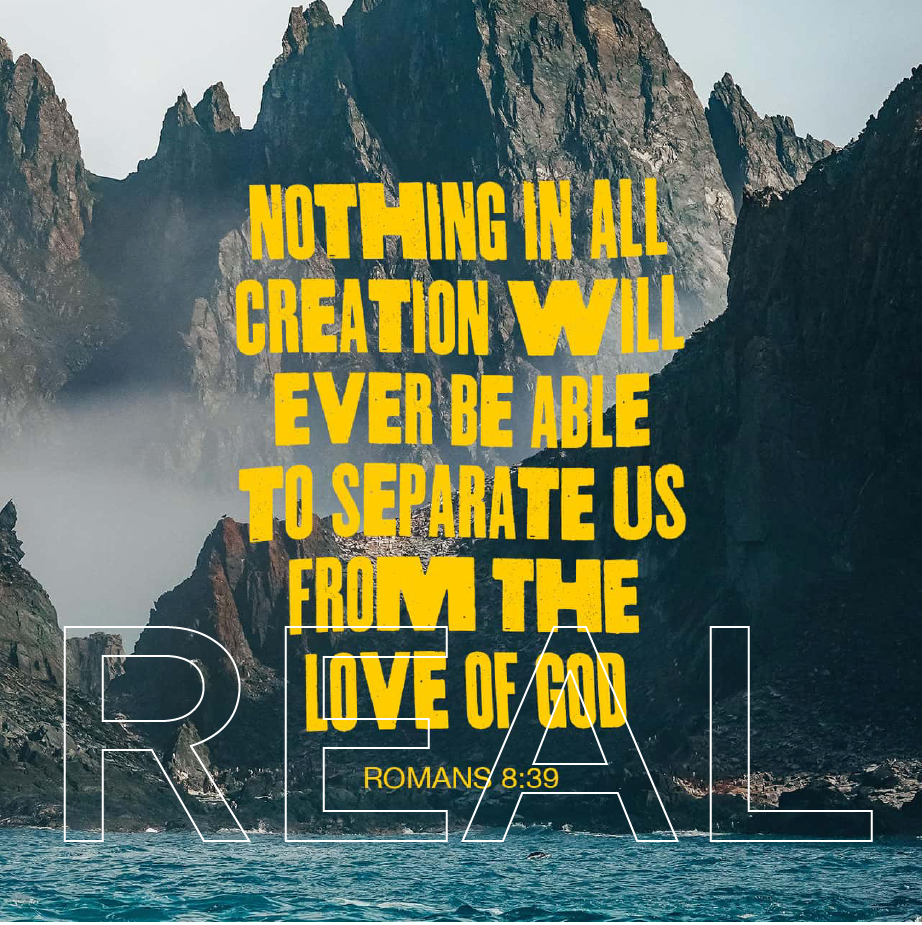
Reflections on Today’s Readings
Romans 8:1-6,9-31, 35, 37-39
Today we continue reflecting around what REAL means in terms of faith and church. Last week we looked at some of the various visions of what Christianity really is in our larger culture, including as a colonial tool for settling foreign countries, a materialist way to make those who are oppressed accept their lot in life as a spiritual duty, and as a way to escape this world for a more spiritual one.
As I wrote last week this last word (REAL), shapes the first two words (SAFE | OPEN) that we’ve used in our past mission statement. This week we’re looking at REAL though the lens of the Apostle Paul, in particular the majestic vision of radical hope that he lays out in chapter 8 of his letter of pastoral advice to the church in ancient Rome (Ro-mans). It’s a passage that attempts to portray how the life and death of Jesus of Nazareth frees us from sin as individuals and as all of creation, to know the fullness of God’s love and presence.
Famous German Jesuit theologian Karl Rahner (1904 – 1984) called this transformative love known in Jesus “God’s self-communication.” God, who is beyond our understanding, becomes tangible for us in the experience of Jesus. God is both the giver and the gift: giving us the knowledge of God’s love, passion, redemptive grace and liberating pur-pose for creation through the gift of himself in Jesus.
This redemptive love, from which no power in the universe can separate us, is transformative, liberating us from the narrow place of self-centered, other-fearing, sin-full expectations to the wide-open green pastures of trust, grace, and cooperation. It’s in knowing God’s wholeness that we are fulfilled, becoming all of who we are created to be.
REAL faith involves transformation, existential change, choosing and acting, receiving and accepting, growth and in-clusion. It’s not just a religious doctrine, or theological doctrine, but a blue-pill sort of existential liberation, hope-full promise, a becoming more than our wildest dreams could ever imagine. It implies forgiving and accepting ourselves – and others – as we are, trusting that God is healing and redeeming us into something more.
QUESTIONS FOR REFLECTION & EXAMEN:
• What engaged, enraged, or surprised you in these texts?
• In this chapter Paul paints a picture of the purpose, goal or hope of all of creation. What does that look like?
• We’re talking about REAL in terms of faith and church in our mission statement. How do you experience or practice the vision of this chapter as REAL? How do you struggle with that? Why?
• What invitation do you hear the Spirit of God speaking to you – or to us – through this word of scripture?
About capcoakland

 CAPC Oakland